


Winter can be tough on boats, especially when freezing temperatures and moisture create problems that owners might not notice until spring. Whether you own a small fishing boat or a larger recreational vessel, proper winter preparation helps prevent expensive repairs and keeps your boat in excellent condition. Taking a few precautions before temperatures drop can save you considerable time and frustration when boating season returns. Understanding how to protect your boat during the winter allows you to preserve its performance and avoid unnecessary maintenance costs.
Start Winterizing Before Temperatures Drop
Waiting until the first freeze to prepare your boat creates unnecessary risks. Cold weather can arrive unexpectedly, and even a brief temperature drop can damage vulnerable components.
Start planning your winterization process several weeks before your area’s typical freezing temperatures. This gives you enough time to gather supplies, schedule professional maintenance, and address existing problems.
Check your owner’s manual for manufacturer recommendations regarding winter storage. Different boats require different procedures, especially when comparing outboard engines with inboard systems.
Early preparation also gives you flexibility when unexpected maintenance issues arise. You won’t need to rush through important tasks simply because colder weather approaches.
Thoroughly Clean Your Boat Before Storage
Cleaning your boat before winter storage prevents dirt and contaminants from causing long-term damage. Salt residue, algae, and accumulated grime can deteriorate surfaces when they remain untouched for several months.
Wash the exterior with marine-safe cleaning products and rinse everything thoroughly. Pay particular attention to areas around fittings where debris commonly accumulates.
Inside the boat, remove food containers, fishing supplies, and anything that might attract pests. Vacuum carpets and wipe down interior surfaces.
Allow everything to dry completely before covering your boat. Trapped moisture encourages mildew growth and can damage upholstery during extended storage.
Inspect the Hull for Existing Damage
Winter storage provides an excellent opportunity to address hull damage before minor problems become expensive repairs.
Examine your boat’s exterior for cracks, scratches, and damaged protective coatings. Pay special attention to areas near the waterline and locations where the hull frequently contacts docks.
Small surface imperfections may require a marine fairing compound to create a smooth surface before applying an appropriate protective coating. Follow the product manufacturer’s instructions and verify compatibility with your hull material.
Addressing these imperfections before storage helps prevent moisture from entering vulnerable areas. Larger cracks or structural concerns require professional evaluation before you attempt repairs.
Protect Your Engine From Freezing Temperatures
Your boat’s engine requires special attention because freezing water can cause serious mechanical damage.
Follow the manufacturer’s winterization instructions for your specific engine. Depending on its design, you may need to drain cooling passages, flush the system, or circulate appropriate marine antifreeze.
Never assume every engine requires the same winterization process. Some outboard engines drain naturally when you position them correctly, while other systems require additional procedures.
Change the engine oil and replace the filter when the manufacturer recommends doing so. Fresh oil helps remove contaminants that could contribute to corrosion during storage.
Stabilize Your Fuel System
Fuel can deteriorate during extended storage, potentially creating engine performance problems when spring arrives.
Check your engine manufacturer’s recommendations regarding fuel levels and approved stabilizers. Ethanol-blended gasoline deserves particular attention because moisture contamination can create additional complications.
If your manufacturer recommends a stabilizer, add the correct amount and run the engine according to the product instructions.
Consider these important fuel system precautions:
- Inspect fuel lines for cracks or deterioration.
- Replace damaged hoses before storage.
- Check connections for signs of leakage.
- Follow manufacturer recommendations for tank levels.
- Keep fuel vents clear and functional.
These precautions help reduce fuel-related problems and make restarting your engine easier when warmer weather returns.
Take Care of Your Boat’s Battery
Cold temperatures and extended inactivity can reduce battery performance. Proper battery maintenance helps prevent unexpected electrical problems when boating season resumes.
Disconnect the battery according to your manufacturer’s instructions. Clean the terminals and inspect the cables for corrosion.
If you remove the battery, store it somewhere dry and protected from extreme temperatures. Use a compatible maintenance charger when appropriate to maintain its charge.
Avoid leaving a conventional charger connected indefinitely unless it specifically supports automatic battery maintenance.
For boats that remain in the water, preserve essential electrical systems such as automatic bilge pumps and follow your marina’s safety requirements.
Drain Water From Vulnerable Systems
Water remaining inside plumbing systems can expand when temperatures fall below freezing. This expansion may crack pipes, damage fittings, or destroy expensive equipment.
Inspect freshwater tanks, washdown systems, livewells, and onboard plumbing. Drain these components according to their manufacturer instructions.
Some systems require marine or RV antifreeze to protect areas where draining alone cannot remove trapped water.
Use only products suitable for the specific system. Never substitute automotive engine antifreeze for products intended for potable water plumbing.
Remember to inspect pumps and hoses that might retain small amounts of water.
Choose the Right Winter Storage Location
Your storage location influences how well your boat withstands winter conditions.
Indoor storage offers excellent protection from precipitation and temperature fluctuations. However, enclosed facilities often cost more than outdoor alternatives.
Outdoor storage can work well when you use appropriate covers and maintain the boat throughout winter.
Consider accessibility when choosing a location. You should have enough room to inspect the boat and remove accumulated snow.
If you keep your boat in the water, confirm that your marina supports winter mooring and understand its requirements for ice protection and monitoring.
Invest in a Proper Boat Cover
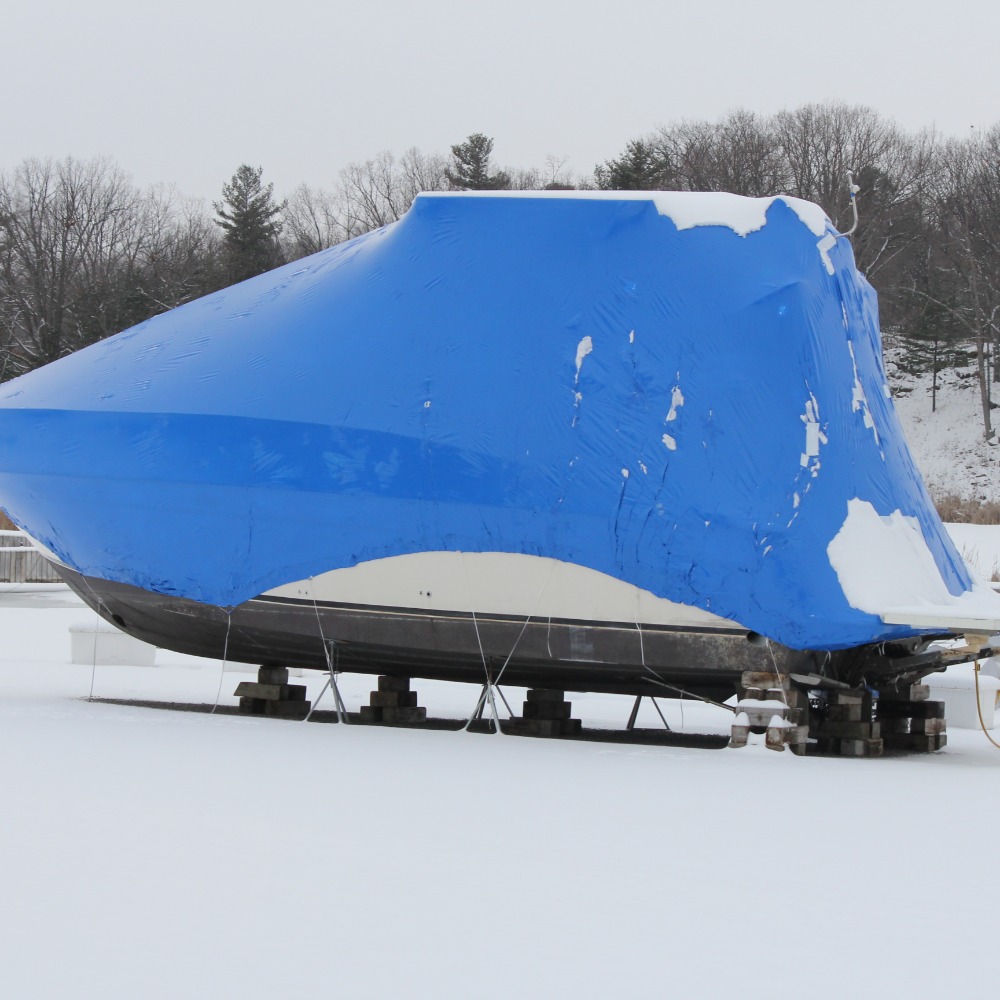
A quality boat cover protects your vessel from snow, rain, and debris throughout winter.
Choose a cover that fits securely without creating low areas where water can collect. Excessive pooling places unnecessary stress on the material and its supporting structure.
Shrink wrapping offers another option for seasonal protection, especially for larger boats. However, proper installation and ventilation remain essential.
Inspect straps and attachment points regularly. Strong winds can loosen covers and expose vulnerable surfaces.
Avoid using materials that trap moisture against upholstery or finished surfaces.
Prevent Moisture and Mold Problems
Moisture accumulation creates significant problems during winter storage, particularly inside enclosed cabins.
Improve ventilation wherever possible without allowing precipitation to enter. Appropriate vents help reduce condensation and maintain airflow.
Remove damp cushions and fabric accessories when practical. Store these items in a clean, dry environment.
Consider moisture absorbers designed for marine storage, but remember that they cannot replace proper ventilation.
Check enclosed compartments periodically for condensation or mildew. Early detection makes cleanup easier and helps protect interior materials.
Check Your Boat Throughout Winter
Winterizing your boat doesn’t mean you should ignore it until spring.
Schedule occasional inspections to identify problems before they worsen. After heavy snowfall, check your cover and carefully remove excessive accumulation.
Look for loose supports, standing water, or evidence of unwanted animal activity.
Inspect the surrounding storage area for drainage problems that might expose your trailer or boat to unnecessary moisture.
If your boat remains afloat, arrange appropriate monitoring throughout the season.
Prepare for a Successful Spring Launch
Good winter protection for your boat makes spring preparation considerably easier. Keep records of maintenance tasks and note any repairs you still need to complete.
Before launching, inspect the hull and verify that your engine operates correctly. Reconnect electrical equipment and check essential safety systems.
Remove winterization materials according to manufacturer instructions. Test plumbing and inspect connections before returning to normal operation.
Taking winter maintenance seriously protects your investment and helps extend your boat’s useful life. With consistent preparation and occasional inspections, you can reduce costly surprises and enjoy a smoother return to boating when temperatures rise.
Image Credentials: akhug, #138846965
A large boat that is sitting on top of a frozen lake. There is a large, blue tarp covering over the top of the boat.